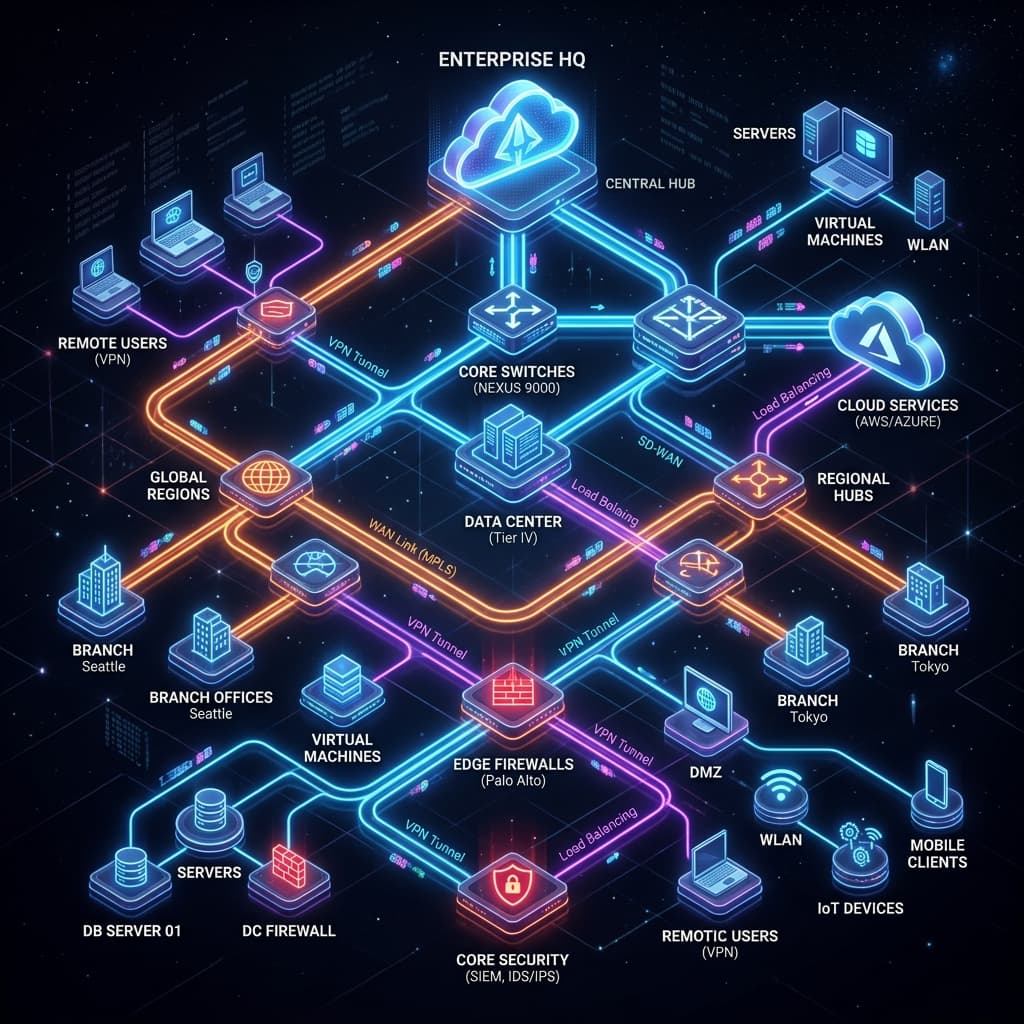
Historically, enterprise application integration (EAI) was a highly rigid and expensive process. It required specialized developers to map schemas, configure middleware, and write fragile validation scripts. When a business process received unstructured input, such as an email inquiry or a PDF invoice with a slightly modified format, the system would fail, requiring manual human sorting. Generative AI is breaking this barrier by acting as a universal semantic translator.
At the core of this transformation is the idea of the LLM as a central processing unit. Instead of writing custom code to handle every possible edge case, developers can use a Large Language Model to interpret unstructured inputs, deduce the user's intent, extract critical parameters, and decide which enterprise tool to trigger. This cognitive architecture allows software to adapt dynamically to varying data structures without breaking.
For instance, when an enterprise receives a complex purchase order, a retrieval-augmented generation (RAG) system can query local vector databases for relevant pricing guidelines, tax structures, and contract terms. The LLM then synthesizes this retrieved context to validate the order, flag discrepancies, and draft a response. This process, which once took human operators hours, can now be executed securely in seconds.
However, deploying these cognitive operating systems across an enterprise requires strict adherence to security and reliability protocols. Enterprises must set up local firewalls and API proxies to prevent data leaks, enforce strict data access controls, and implement fallback mechanisms. If an LLM fails to output structured JSON or triggers a rate limit, the system must gracefully redirect the task to a backup model or route it to a human supervisor.
Ultimately, generative AI represents a shift from static software automation to dynamic cognitive automation. Enterprises that successfully integrate LLMs as the underlying orchestrator of their databases, CRMs, and internal tools will unlock levels of efficiency and agility that were previously unimaginable, establishing a foundation for the autonomous enterprise of the future.